Non-Chemical vs Chemical Water Treatment: Which Is Right for Your Facility?
Facility managers evaluating a new water treatment system usually face the same choice: continue with a traditional chemical dosing program, or switch to a non-chemical alternative. Both approaches solve the same underlying problems (scale, corrosion, and bacterial growth) but they get there very differently.
How they compare
Upfront cost. Chemical dosing systems typically have a lower upfront cost, since the core equipment (dosing pumps, tanks, controllers) is relatively simple. Non-chemical systems require a larger initial investment in equipment.
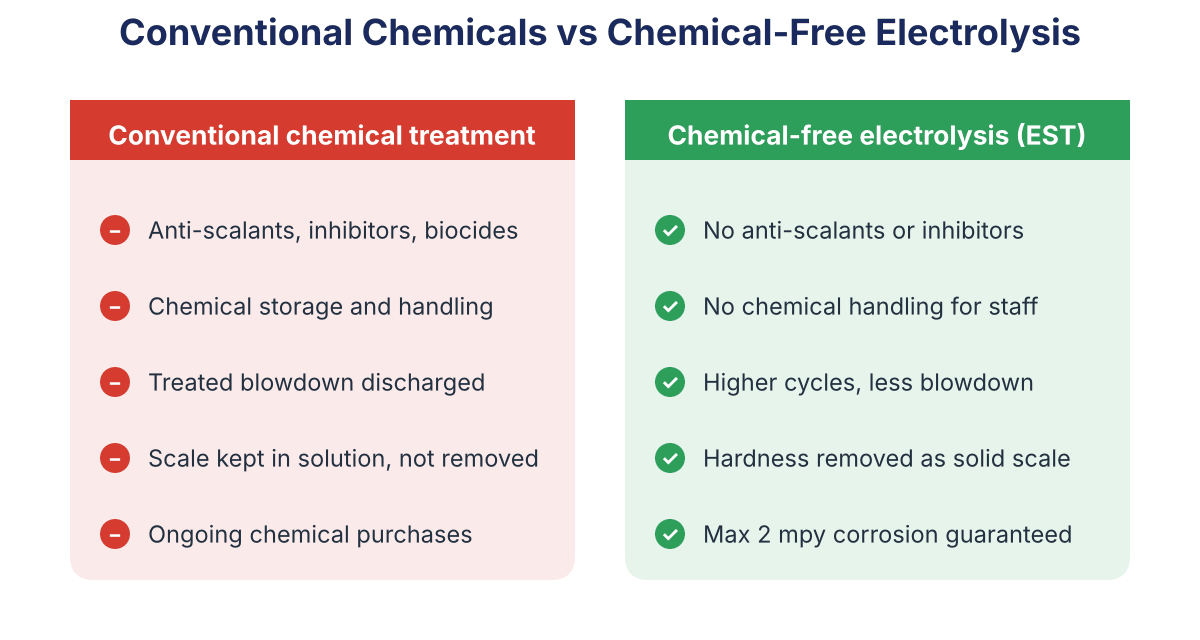
Ongoing cost. This is where the comparison flips. Chemical treatment requires continuous purchasing of consumables (biocides, corrosion inhibitors, scale inhibitors) plus the labor to manage dosing schedules and replenish supply. Non-chemical systems have no consumables to buy, which significantly lowers the cost of operation over the system’s lifetime.
Safety. Chemical treatment involves storing and handling substances that can pose health and safety risks to staff, along with the operational burden of proper storage, labeling, and spill response. Non-chemical systems eliminate this risk since there is nothing hazardous to store or handle.
Environmental impact. Chemical treatment produces byproducts that must be managed and, in many cases, cannot be discharged without additional treatment. As environmental regulations tighten, chemical discharge compliance is becoming more complex and costly. Non-chemical systems avoid this problem because they do not introduce regulated substances into the water in the first place.
Effectiveness. Both approaches, when properly designed for the application, are effective at controlling scale, corrosion, and bacteria. Chemical treatment offers more flexibility to fine-tune dosing for unusual water chemistry. Non-chemical systems perform consistently once installed and require less ongoing adjustment.
Maintenance. Chemical systems need regular monitoring of dosing rates, chemical inventory, and water chemistry testing. Non-chemical systems generally require less day-to-day management once commissioned, since the electrochemical process runs automatically.
Which is right for your facility?
Chemical dosing may still make sense for facilities with highly variable water chemistry that benefits from frequent manual adjustment, or those with an already well-optimized chemical program and no regulatory pressure to change.
Non-chemical water treatment tends to be the better fit for:
- Facilities looking to reduce long-term operating costs
- Sites facing tightening environmental discharge regulations
- Organizations pursuing LEED certification or sustainability targets
- Facilities that want to eliminate chemical storage and handling risk
- Cooling towers, wastewater systems, and hot water systems where scale, corrosion, or bacteria are recurring problems
The bottom line
There is no universal answer, but for most facilities weighing the two options, the lower long-term operating cost, reduced safety risk, and easier regulatory compliance make non-chemical water treatment worth a closer look, especially for cooling towers and wastewater applications where chemical costs tend to be highest.
Compare our solutions or request a free demonstration.
Water Treatment Asia (ALA) specialises in non-chemical water treatment in Thailand, including non-chemical water treatment for cooling towers.


Leave A Comment