
What Is Chemical-Free Water Treatment and How Does It Work?
For decades, industrial and commercial water systems have relied on chemical dosing to control scale, corrosion, and bacteria. Chemical-free water treatment offers a different approach: one that solves the same problems using electricity instead of chemical additives.
How chemical-free water treatment works
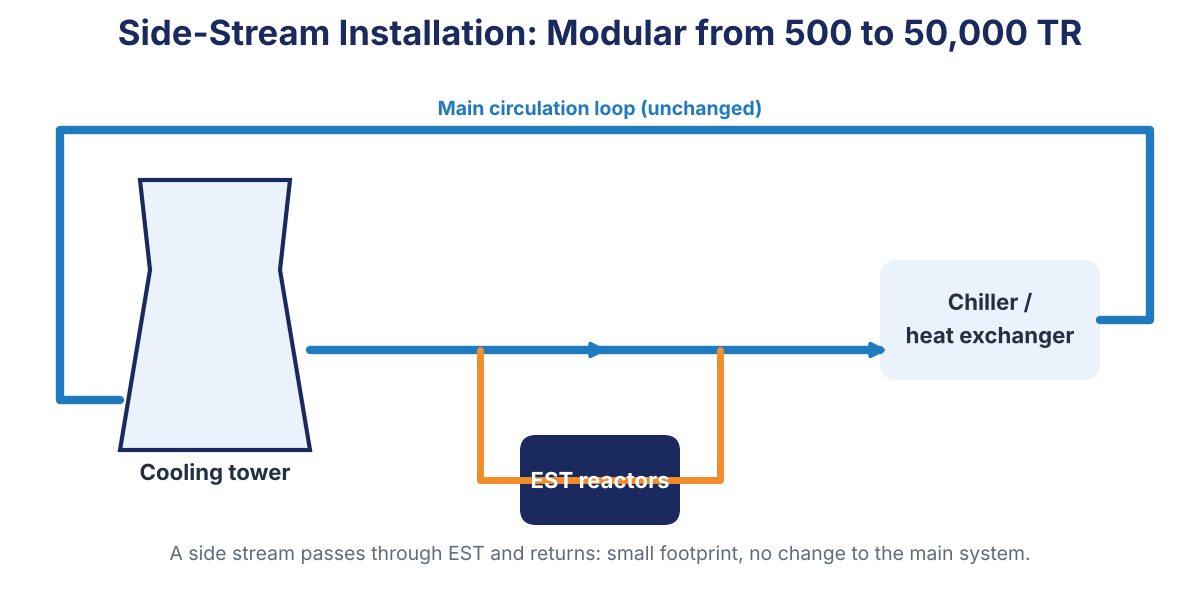
At the core of chemical-free water treatment is electrochemistry. Rather than dosing water with corrosion inhibitors, biocides, or scale-control chemicals, a chemical-free system applies a controlled electrical process directly to the water as it circulates through a cooling tower, wastewater line, or hot water system.
Three electrochemical processes commonly do the work that chemicals used to:
- Electrocoagulation destabilizes contaminants suspended in water, causing them to clump together and separate out, similar to what a chemical coagulant would do, but without adding any chemical to the water.
- Electro-oxidation generates oxidants directly in the water using electrical current, which controls bacteria, algae, and organic contaminants the same way chlorine or other biocides would.
- Electrolytic scale control prevents dissolved minerals like calcium and magnesium from forming hard scale deposits on pipes, heat exchangers, and tower fill.
Because these processes happen electrically rather than chemically, there is no chemical to purchase, store, transport, or dispose of, and no risk of chemical spills or exposure for maintenance staff.
Why facilities are switching from chemical to non-chemical treatment
- Cost. Chemical treatment programs carry ongoing costs for consumables, storage, and disposal. Chemical-free systems have a higher upfront investment but a lower cost of operation over time, often delivering a fast return on investment through energy and water savings.
- Regulation. Environmental discharge regulations are tightening in many countries, including Thailand, making it harder to legally discharge water treated with certain chemicals. Chemical-free systems avoid this issue by not introducing regulated substances in the first place.
- Sustainability goals. Facilities pursuing LEED certification or corporate sustainability targets increasingly favor water treatment methods that reduce chemical use and hazardous waste generation.
Is chemical-free water treatment as effective as chemical treatment?
When properly sized and installed, non-chemical systems achieve comparable, and in many cases better, results than chemical dosing, particularly for scale prevention and biofouling control. The technology has been deployed across more than 50 countries in industries ranging from hospitality and healthcare to manufacturing and aviation, with documented case studies showing measurable reductions in scale, corrosion, and bacterial growth.
Getting started
If your facility currently relies on chemical dosing for cooling towers, wastewater, or hot water systems, a chemical-free alternative may be able to replace it entirely, reducing your operating costs, chemical handling risk, and environmental footprint in the process.
Water Treatment Asia (ALA) specialises in non-chemical water treatment in Thailand, including non-chemical water treatment for cooling towers.


Leave A Comment